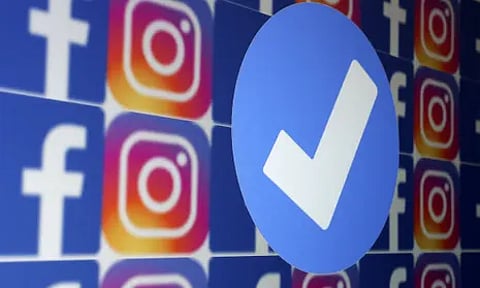


Instagram and Facebook users can now pay for blue tick verification, according to parent company Meta.
On the web, Meta Verified will cost $11.99 (£9.96) per month, or $14.99 on the iPhone.
This week, it will be available in Australia and New Zealand.
Meta's CEO, Mark Zuckerberg, stated that the move will improve security and authenticity on social media apps.
Elon Musk, Twitter's owner, implemented the premium Twitter Blue subscription in November 2022.
Although Meta's paid subscription service is not yet available for businesses, anyone can pay for verification.
Badges, also known as "blue ticks," have been used as authentication tools for high-profile accounts.
According to Meta, the subscription would provide paying users with a blue badge, increased visibility of their posts, protection from impersonators, and easier access to customer service.
According to the BBC, the change will not affect previously verified accounts, but it will increase visibility for some smaller users who become verified as a result of the paid feature.
Allowing paying users access to a blue tick has caused problems for other social media platforms in the past.
Twitter's pay-for-verification feature was halted in November after users began impersonating big brands and celebrities by purchasing the badge.
To be verified, Instagram and Facebook usernames must match a government-issued ID document, and users must have a profile picture that includes their face, according to Meta.
Subscription-based models are also used by Reddit, YouTube, and Discord.
Meta has not yet specified when the feature will be rolled out to other countries, although Mr Zuckerberg said in a post it would be "soon".
The company announced 11,000 job losses in November as a result of overinvestment during the Covid-19 pandemic.
Mr Zuckerberg stated at the time that he had predicted an increase in Meta's growth based on its rise during the pandemic, but that this did not occur.
"Many people predicted this would be a permanent acceleration," he wrote, "and I did as well, so I decided to significantly increase our investments."
Instead, he claimed that a "Macroeconomic downturn" and "Increased competition" caused revenue to be significantly lower than anticipated.
"I made a mistake, and I accept responsibility," he said at the time.
