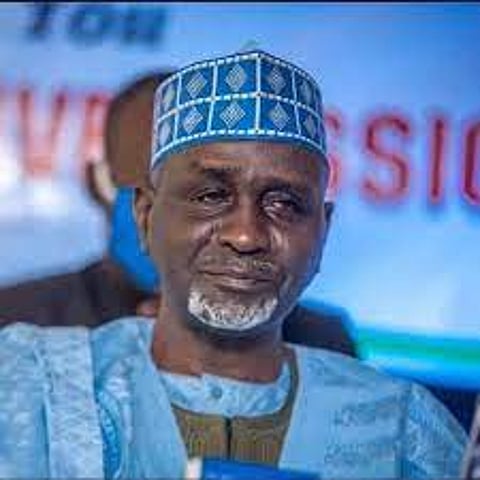


Senator Shekarau, who observed that socio-economic conditions determine citizens' well-being, stated how these conditions precisely reflect aspects such as income, safety, security, jobs, access to healthcare facilities, education, and electricity.
At the 5th Annual Conference of the International Islamic University Malaysia Association, Nigeria Chapter, themed "Nigeria’s Social Economic Conditions: Realities and Remedies," held on Saturday, Senator Shekarau conveyed these sentiments.
The virtual program also featured the Emir of Keffi in Nasarawa State, Dr. Shehu Chindo Yamusa III, President of IIUM Aluminin, Nigeria Chapter, Professor Bashiru Adeniyi Omipidan, and Director of IIUM Alumni Relations Division, Br. Illmyzat Bin Ismail.
Represented by renowned economist Dr. Muhammad Sagagi, Senator Shekarau highlighted Nigeria's poor socio-economic condition. He lamented that, despite the country's abundant resources, leaders have failed to provide the development and living standards that Nigerians expect and demand.
He said, “Currently, we have more than 23 million unemployed people, and maybe 20 million more under-employed to a total of about 15 million people who are either unemployed or underemployed. But what is also most important here is that this unemployment is more acute amongst the youth.
“Unfortunately, the growth in the economy has been erratic and small. Growth rates are small and erratic. If you calculate it from 1999 to 2024 or maybe take an even shorter period of 11 years, the average growth rate of the economy was about 2.4%. The highest ever was 6.2% in 2014. And then the lowest was minus 1.92. In that session. Now, the implication is that these cross rates are not enough to create jobs and fight poverty. They are not enough to provide the social, economic, the kind of socio-economic conditions that are appropriate for this country.
“Therefore the character of growth in this country would contribute immensely, to job losses, to poverty, and to the inability of the state to provide socio-economic, the kind of social economical condition that we expect or that we demand.
