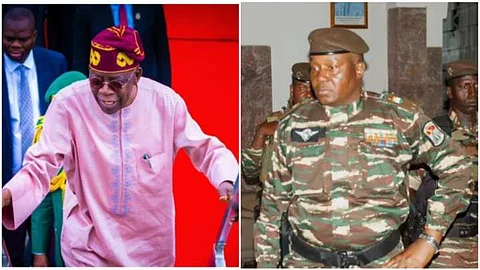


As efforts continue to resolve the crisis in Niger, it has been reported that General Abdourahamane, the head of the military junta in Niger sought direct access and discussion with President Tinubu.
However, President Tinubu has firmly declined this overture, as reported by Empowered Newswire.
Diplomatic sources have expressed concerns that agreeing to such one-on-one talks would be seen as a challenge to democratic governance in the region and a sign of disrespect to Niger's still-detained President, Mohamed Bazoum.
Sources linked to Niger's Permanent Mission to the United Nations in New York have confirmed that a group of Muslim Ulamas approached President Tinubu in Abuja about a month after the Niger coup, conveying General Tchiani's request for direct interaction. The Ulamas saw this as a possible way to resolve the crisis.
In a meeting held on August 24 in Abuja, President Tinubu made it clear that he would not engage in direct talks with the leader of an illegitimate government that came to power through a military coup, toppling a democratically elected government in Niger.
Nigerian government sources have also stated that President Tinubu's position is that such an interaction would improperly legitimize a coup leader whose government is not recognized by the Economic Community of West African States (ECOWAS) emphasing that it would send the wrong signal about democratic governance in Africa.
While some in the African diplomatic community believe that President Tinubu's rejection of direct talks may hinder progress in resolving the Niger crisis, the impasse continues. Diplomats suggest that a unified front among President Tinubu and other ECOWAS leaders is essential in dealing with the military takeover.
Nigeran diplomats in New York argue that sending envoys from the Nigerian government, who have themselves benefited from past military governments, sends a conflicting signal. Nonetheless, the Niger military junta eventually engaged with these envoys.
