
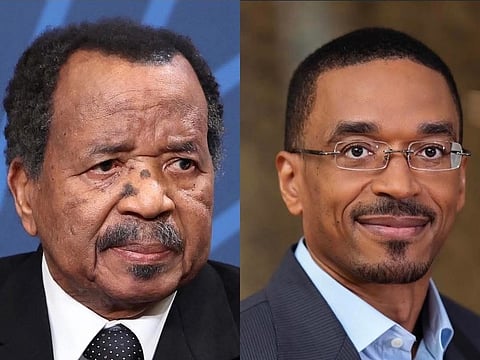
Paul Biya Reportedly Appoints Son as Cameroon’s Vice President

The president of Cameroon, Paul Biya, has appointed his son Franck Emmanuel Biya as vice president of the country and head of the armed forces. His decision has sparked significant concerns over succession and power consolidation in Cameroon.
The appointment was confirmed on April 4, 2026, through a decree that also designates Franck Biya as Minister Delegate at the Ministry of Defence. This move effectively installs him at the centre of Cameroon's national security structure.
The document states, "Mr Franck Emmanuel Biya is appointed Vice President of the Republic of Cameroon.”
It added, "Mr Franck Emmanuel Biya is appointed Head of the Armed Forces.”
Expanding his role, the decree notes: “The Vice President of the Republic, Mr Franck Emmanuel Biya, is also appointed Minister Delegate at the Ministry of Defence of the Republic of Cameroon.”
Citing constitutional provisions and defence laws, the president explained that these appointments were carried out to meet "service requirements", stating that the decree “shall be registered, published according to the procedure of urgency, and documented in the Official Gazette.”
These developments occurred shortly after the 92-year-old President Biya began an unprecedented eighth term in office. His inauguration followed a highly disputed election that triggered nationwide demonstrations and garnered significant international scrutiny.
This development occurred a few months after the 92-year-old President Biya officially started his eighth term in office. A term no one had ever held before. This all came about after an election that was pretty controversial, sparking protests all over the country and drawing attention from the international community.
During that election, Biya secured about 54% of the votes, defeating the main opposition candidate, Issa Tchiroma Bakary, who received about 35%. But Tchiroma Bakary rejected the results, claiming he won and says the government cheated, although the government firmly denies those allegations.
Despite the controversy, Biya described the election as “satisfactory” and praised the electoral commission for its conduct, while lauding security forces for containing the demonstrations without addressing allegations of excessive force.
The Constitutional Council rejected several petitions challenging the election results, citing insufficient evidence or lack of jurisdiction.
Since succeeding Ahmadou Ahidjo in 1982, Cameroonian leader Paul Biya has faced a new wave of backlash. Opponents are accusing him of trying to tighten his hold on power, using both political manoeuvring and military strength.
Appointing his son the vice president and head of the armed forces is likely to raise further worries about who will take over leadership and how democratic the country really is, especially as public pressure for reform keeps growing louder.
According to a 2025 analysis by the Robert Lansing Institute, a move to keep power within the Biya family would transform Cameroon’s leadership transition into a simple handoff from father to son rather than a meaningful political change. The report suggests such a handover would likely necessitate constitutional manoeuvring or favourable rulings from a loyal Constitutional Council to facilitate Franck Biya’s rise to the presidency.
The report further stressed that many Cameroonians are uneasy about the possibility of a "president-for-life" situation evolving into a family dynasty. As one advocate for social justice observed, "Biya’s strategy is all about keeping everyone uncertain." The lack of openness, however, leaves the country feeling "unsure about what lies ahead", and a secretive handover from father to son could stir up divisions within the country or widespread public backlash.
Cameroon’s current political direction mirrors a regional trend where long-standing leaders amend constitutions and manipulate institutions to hold onto power indefinitely.
