

The army reported hitting over 100 targets in 24 hours, including military sites and tunnel shafts in central Jabalia and Khan Yunis in the south, amid ongoing heavy ground combat.
The intense military campaign, initiated after the October 7 Hamas attacks, has resulted in numerous civilian casualties, widespread hunger, and extensive destruction of the coastal territory.
The UN World Health Organization conveyed "harrowing" reports of entire families killed during Christmas Eve strikes on the Al-Maghazi refugee camp in the central area of the Gaza Strip.
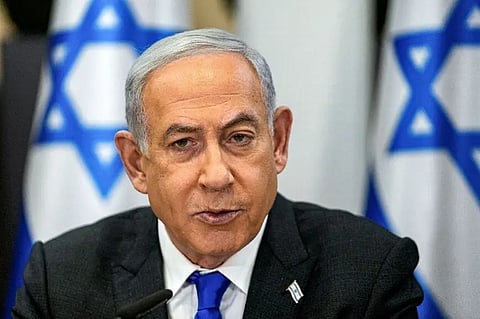
While global concern grows and calls for a ceasefire multiply, Netanyahu, in an op-ed published in the Wall Street Journal late Monday, pledged to continue the course.
“Hamas must be destroyed, Gaza must be demilitarised and Palestinian society must be deradicalised,” he argued. “These are the three prerequisites for peace between Israel and its Palestinian neighbours in Gaza.”
Once the fighting ends, he said, “for the foreseeable future Israel will have to retain overriding security responsibility over Gaza” and build a “temporary security zone on the perimeter” of the territory.
Netanyahu visited Israeli troops in Gaza and then reportedly said at a Likud party meeting, "We're not stopping… We're intensifying the fighting in the coming days."
The bloodiest Gaza war began when Hamas attacked southern Israel on October 7, resulting in approximately 1,140 deaths, mostly civilians, according to an AFP tally based on Israeli figures.
They took 250 hostages, and 129 remain in Gaza. Israel responded with extensive aerial bombardment, a siege, and a ground invasion. The campaign has claimed 20,674 lives, primarily women and children, according to Hamas-run Gaza’s health ministry.
