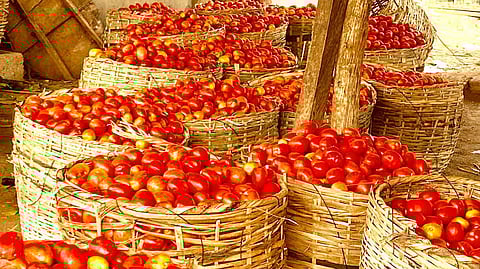

Nigeria's tomato processing industry is facing significant challenges as the price of tomatoes skyrockets by ninefold in Africa's largest economy. The surge in tomato prices, soaring by 847 percent year to date, is mainly attributed to the invasion of Tuta Absoluta, a pest, in major tomato-producing states in May, coupled with the onset of the rainy season. This situation has put immense pressure on tomato processors, leading some of the country's major factories to suspend operations.
Processing factories find it unprofitable to operate during periods of high tomato prices, so they halt production and turn to tomato paste made during the peak season. The off-season, characterized by the rainy season from May to September, is not suitable for tomato cultivation due to the destructive impact of rainwater on the crop.
The country's largest tomato processor, the Dangote Tomato Processing Company, along with two other medium-sized factories, has been forced to close due to challenges in securing an adequate supply of fresh tomatoes. The off-taker agreement between the Dangote factory and farmers has not been respected, leading farmers to sell their produce at higher market prices rather than supplying the factory at agreed-upon rates.
As a result, the price of a big basket of fresh tomatoes in the Mile 12 Market, Lagos, ranges from N90,000 to N100,000, compared to N9,500 in January, signifying a sharp price increase of over 847 percent in six months.
Despite the government's efforts, including the implementation of a tomato policy in 2017 aimed at increasing local production and protecting the industry through tariffs on imported tomato paste, the problem persists. Post-harvest losses and wastages in the tomato value chain remain significant issues.
Although there have been some increased activities and investments in the sector from companies like Olam, Tomato Jos, GBFoods, and Sonia Foods, the challenges persist. Nigeria produces 1.5 million tonnes of tomatoes annually, with a post-harvest loss of 0.7 million tonnes. The country's tomato demand stands at 2.2 million tonnes per year, leaving a gap of 700,000 tonnes that is heavily reliant on tomato paste imports.
A re-evaluation of the tomato policy is necessary to achieve the desired impact on the country's paste and puree industry, according to African Farmer Mogaji, the chief executive of X-ray Consulting. As the government seeks solutions, the focus remains on addressing the underlying issues in the tomato value chain and bolstering processing capabilities to meet local demand and reduce dependence on imports.
